
Webinars
PCSIG YouTube Channel
All of the PCSIG webinars are available to view for free on our YouTube channel.

Free On Demand Webinars
All of our free to view webinars are also listed below, along with additional information about their content and the speakers.
Upcoming Free Live Webinars
Analytical mass spectrometry workflow for VAMS and its applications in cardiology and beyond
Jenny Van Eyk Professor Cardiology, Director of Advanced Clinical Biosystem Research Institute, Cedars-Sinai Medical Center | Neil Spooner Director Spooner Bioanalytical Solutions & Chair Patient Centric Sampling Interest Group
Underlying precision medicine is the concept that an individual’s omic signature, including the proteome, will provide a physician with clinically actionable diagnosis and a subsequent mechanistic therapeutic route that is appropriate for a particular person. The application of remote sampling devices can increase the access of individuals to participate in clinical studies to help define, for example, natural history of diseases and response to therapies. We have built a highly automated robust mass spectrometry workflow for maximizing protein coverage of VAMs devices. We have deployed VAMs to meet challenges in cardiology and other diseases.
Evidence vs adoption in PKU monitoring: Understanding the implementation gap
Rachel Carling Director, Biochemical Sciences, Synnovis | Neil Spooner Director Spooner Bioanalytical Solutions & Chair Patient Centric Sampling Interest Group
This webinar explores the monitoring of phenylalanine and tyrosine in patients with phenylketonuria, outlining the pre‑analytical and analytical limitations of the current dried blood spot (DBS) testing. It presents evidence‑based solutions to reduce variability and improve sample quality, including the introduction of modern sample collection devices. The session will touch on the patient's views of the new sample collection devices, before addressing the central conundrum: why this solution remains difficult to implement despite clear scientific and practical benefits.

Is unreliable point-of-care urine collection putting women on the front line of antimicrobial resistance?
Giovanna Forte CEO, Forte Medical Limited | Neil Spooner Director Spooner Bioanalytical Solutions & Chair Patient Centric Sampling Interest Group
Why is urine not treated like blood? Female urinary tract, bladder or kidney infections are commonly diagnosed using a urine sample, recommended to be midstream because the first void can be contaminated by bacteria, flora and debris from the skin. Guideline collection is challenging for clinicians to explain and women to perform.
Up to 30% contamination creates false-positive dips and empirical broad spectrum prescribing – or failed lab analysis due to mixed growth. Diagnosing UTI early is challenging when urine collection is left to chance and patient intervention. Women do not need antibiotic over prescribing – they need reliable specimen collection.
Previous Webinars
Microsampling-based metabolic phenotyping: Innovations and enhanced techniques for comprehensive lipid and lipoprotein profiling
Jayden Lee Roberts Lecturer, University of Notre Dame Australia; Australian National Phenome Centre, Murdoch University | Neil Spooner Director Spooner Bioanalytical Solutions & Chair Patient Centric Sampling Interest Group
Discover how capillary blood microsamples can enable detailed lipid and lipoprotein profiling, supporting future at-home metabolic health monitoring. This webinar discusses research exploring the use of finger-prick blood samples as a simple and less invasive alternative to standard blood collection, how the microsamples provide results equivalent to venous blood for lipoproteins and inflammation markers, and a method to analyze over 400 lipids from dried blood spot samples, exemplified through a case study into a diabetic cohort, supporting future at-home metabolic health monitoring.

Recent workflow advances and novel applications in volumetric microsampling supporting quantitative bioanalysis
Jeff Plomley Scientific Director, Altasciences | Mingluan Chen Principal Research Scientist, Altasciences | Neil Spooner Director Spooner Bioanalytical Solutions & Chair Patient Centric Sampling Interest Group
In this webinar, an experimental strategy is introduced that aids in microsampling device selection based upon key bioanalytical drivers that consider the relationship between blood hematocrit, collection substrate (rigid porous polymer vs. cellulose), analyte stability and age-related extractability. Exemplary case studies highlighting novel microsampling workflows are then presented for (i) an anti-tuberculosis drug panel requiring pre-treatment of Capitainer®B cellulose substrate to stabilize three reactive analytes and (ii) Fomivirsen, a 21-mer antisense oligonucleotide and its N-1 metabolite, wherein high-yielding extractability with surfactant in a comparability study of Mitra VAMS and Capitainer®B necessitated a hybridization LC-MS/MS approach to overcome matrix complexities.
Expanding zip codes: A novel approach to reaching and engaging clinical trial participants across the United States
Carissa Jones Founder, Ventus, LLC | William (Bill) Annes Founder, Ventus, LLCSenior Director, Clinical Laboratory Sciences, Eli Lilly | Gerald E Finken CEO, RxE2 | Neil Spooner Director Spooner Bioanalytical Solutions & Chair Patient Centric Sampling Interest Group
The presenters of this webinar will define the need for expanding participants across clinical trials and explore a novel method for engagement and retention.
We are faced with the reality that a drug may not work in certain individuals because it does not mirror a real-world population. There are many hurdles in reaching a broader population of clinical trial participants, which can lead to insufficient data on a drug's efficacy and safety.
Microsampling: From promise to implementation?
Christophe Stove Professor, Laboratory of Toxicology, Department of Bioanalysis, Ghent University | Neil Spooner Director Spooner Bioanalytical Solutions & Chair Patient Centric Sampling Interest Group
This webinar aims at providing a 'status update' on microsampling, from its 'revival' some 15 years ago, to now.
Some 15 years ago, microsampling was 'rediscovered' as a technique with great potential for patient-centric sampling, allowing home-based patient follow-up and rendering large-scale epidemiological studies more feasible. However, despite many successful applications, the implementation in both industry and clinic have remained slow. This webinar aims at providing an insight into the potential of microsampling and what the hurdles are that (may) need to be overcome for a more widespread implementation.
Of interest to anyone involved in patient-centric sampling, epidemiological studies and (home-based) therapeutic drug monitoring.

From conventional to convenient: Blood microsampling in metabolomics
Michael Witting Co-Head Metabolomics and Proteomics Core, Helmholtz Zentrum München, Germany | Neil Spooner Director Spooner Bioanalytical Solutions & Chair Patient Centric Sampling Interest Group
This webinar explores blood microsampling in untargeted and targeted metabolomics, its key advantages and the need for validation against traditional sampling methods.
Metabolomics, the large-scale study of metabolites within biological samples, is rapidly advancing as a key tool in clinical diagnostics and personalized medicine. However, such field of research often involves large-scale studies, multi-center sample collection, or longitudinal follow-up of subjects, which often generate limitations associated with sample collection, handling, and stability. To overcome challenges in traditional blood sampling, blood microsampling has emerged as a promising alternative, offering practical and logistical advantages. However, to fully integrate microsampling into untargeted metabolomics, further research is needed to validate its performance and ensure reliable metabolite profiling comparable to conventional sampling methods.
Microsampling for illicit drug testing
Laura Mercolini, PhD Associate Professor of Medicinal Chemistry, Head of the Research Group of Pharmaco-Toxicological Analysis, Research Group of Pharmaco-Toxicological Analysis (PTA Lab), Department of Pharmacy and Biotechnology (FaBiT), Alma Mater Studiorum - University of Bologna, Bologna, Italy | Michele Protti, PhD Senior Assistant Professor of Medicinal Chemistry, Research Group of Pharmaco-Toxicological Analysis (PTA Lab), Department of Pharmacy and Biotechnology (FaBiT), Alma Mater Studiorum - University of Bologna, Bologna, Italy | Neil Spooner Director Spooner Bioanalytical Solutions & Chair Patient Centric Sampling Interest Group
This webinar explores microsampling and its applications in the analysis of illicit drugs, with a focus on method development and validation.
Microsampling represents a powerful tool for minimally invasive bioanalysis. In this webinar, we present an overview of the latest miniaturized technologies and workflows tailored for illicit drug testing. Applications span from forensic and toxicological contexts to anti-doping analysis. The session includes an overview of the microsampling technologies used, insights into method development and validation, and real-world applications.
Biomarkers of colorectal polyps from at-home collected dried blood spots
Ben Herbert Chief Scientific Officer, Sangui Bio, Australia | Neil Spooner Director Spooner Bioanalytical Solutions & Chair Patient Centric Sampling Interest Group
Pre-cancer, colorectal polyp, biomarker discovery using novel sample preparation and MS from at-home collected blood in Mitra.
Sangui Bio is conducting a colorectal polyp study to identify biomarkers that predict large pre-cancerous polyps. 1400 at-home blood samples have been collected using Mitra. The highest risk group in terms of progression to cancer is those with polyps 10 mm or larger. The control group is defined as polyps 5 mm or smaller, including cases with no detected polyps. The blood samples were analyzed using novel sample preparation and MS. Over 2500 proteins were identified and quantified from each sample and several hundred proteins are significantly different.
Output from a PCSIG clinical trial – Impact of home blood sampling on recruitment and retention
Robyn Rourick Senior Director, Outsourcing Portfolio Management, Genentech) | Mike Walker Statistics Consultant, Walker Bioscience | Neil Spooner Director Spooner Bioanalytical Solutions & Chair Patient Centric Sampling Interest Group
Learn about the impact of collecting blood samples at home on trial recruitment and participant attitudes to the approach.
Patient centric blood sampling offers an alternative approach for the collection of biological samples in locations away from the clinical setting, such as at home. This webinar describes the outcomes of a cross organizational clinical trial that was designed to examine whether collecting patient centric blood samples at home, compared to the same approach in the clinic, had any impact on the recruitment and retention of trial participants. We will also present data obtained from subject questionnaires on attitudes to these sampling approaches.
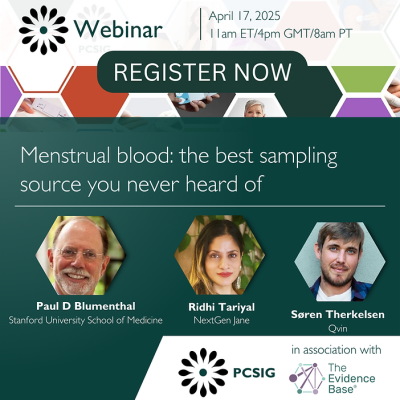
Menstrual blood: the best sampling source you never heard of
Paul D Blumenthal Professor Emeritus, Obstetrics and Gynecology, Stanford University School of Medicine, Stanford Program for International Reproductive Education and Services (SPIRES) | Ridhi Tariyal CEO, NextGen Jane | Søren Therkelsen CPO, Qvin | Neil Spooner Director Spooner Bioanalytical Solutions & Chair Patient Centric Sampling Interest Group
Taking advantage of a natural non-invasive biopsy.
Menstrual blood represents an innovative and minimally invasive sample type offering valuable insights for clinical trials and drug development. This webinar explores the biology and physiology of menstrual blood, highlights various practical collection methods including tampons, cups, and pads, and discusses the importance of pre-analytical standardization to ensure consistent, high-quality data.
Featuring case studies from leading innovators Qvin and NextGen Jane, attendees will gain practical knowledge on implementing menstrual blood-based diagnostics and hear first-hand patient testimonials emphasizing real-world applications.
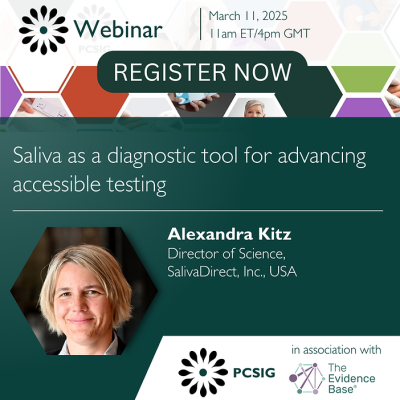
Saliva as a Diagnostic Tool for Advancing Accessible Testing
Alexandra Kitz Director of Science, SalivaDirect, Inc. | Neil Spooner Director Spooner Bioanalytical Solutions & Chair Patient Centric Sampling Interest Group
Learn how saliva-based testing can improve access to diagnostics, reduce patient and provider costs, and have a positive impact on public health response strategies.
In this webinar, we explore how saliva-based diagnostics can be used to advance accessible and equitable healthcare solutions. We discuss the benefits of non-invasive saliva sampling, its applications in diagnosing both infectious and chronic diseases, and its influence on the diagnostic landscape. Real-world examples are shared to demonstrate how innovative protocols and programs can support testing in LMICs, improve access to care in resource-limited settings, reduce patient and provider costs, and facilitate rapid public health response efforts.
Join us to learn how saliva-based testing can offer a patient-friendly solution with the potential to transform global health outcomes.
Perceptions and acceptability of microsampling for remote monitoring in patients with plasma cell dyscrasias
Nithya Paranthaman Senior Scientific Officer, The Royal Marsden Hospital | Neil Spooner Director Spooner Bioanalytical Solutions & Chair Patient Centric Sampling Interest Group
In this webinar, we discuss the importance of involving patients in our research and the valuable insight we have been able to gain.
Multiple myeloma is categorized as a relapsing-remitting blood cancer and requires frequent blood tests. Microsampling introduces a self-administered, blood sampling technique that has potential to revolutionize multiple myeloma monitoring.
In this presentation, we discuss how we incorporated patient and public involvement (PPI) into our study.
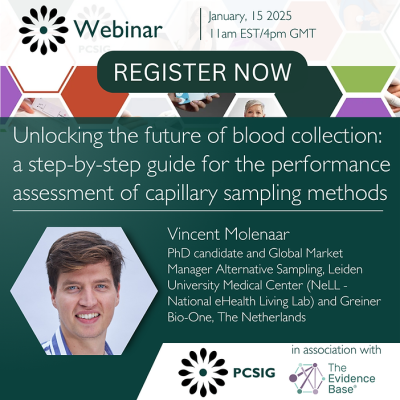
Unlocking the future of blood collection: a step-by-step guide for the performance assessment of capillary sampling methods
Vincent Molenaar PhD candidate and Global Market Manager Alternative Sampling, Leiden University Medical Center (NeLL - National eHealth Living Lab) and Greiner Bio-One, The Netherlands | Neil Spooner Director Spooner Bioanalytical Solutions & Chair Patient Centric Sampling Interest Group
Verifying alternative capillary sampling methods for the responsible development of decentralized blood collection using a new methodology based on Six Sigma.
As alternative blood sampling methods continue to grow due to phlebotomist shortages and the need for person-centered care, it is vital to support these innovations with solid scientific validation. This webinar introduces the σ3-methodology, a Six Sigma-based approach developed to measure and verify the accuracy and precision of alternative blood sampling methods like lateral upper-arm blood collection (LUBC). Watch to explore this methodology, learn about its clinical impact, and understand how it can enhance diagnostic care by enabling safe and effective decentralized sample collection at home.

Paradigm shifts in phlebotomy: providing reasonable adjustment for underserved patient populations
Karen Perkins Principal Clinical Scientist (Biochemistry), Dept Blood Sciences, Pathology, Morecambe Bay Hospitals NHS Trust, UK | Neil Spooner Director Spooner Bioanalytical Solutions & Chair Patient Centric Sampling Interest Group
You will learn about adapting routine clinical laboratory procedures to enable capillary sampling in patient groups who require reasonable adjustments for accessing blood tests for clinical assessment.
Attending a phlebotomy appointment can cause high levels of anxiety, especially in patients with learning disabilities. Alternative blood collection methods are now available and offer reasonable adjustments to phlebotomy for many patient groups.

PCSIG – Review of 2024
Neil Spooner Director Spooner Bioanalytical Solutions & Chair Patient Centric Sampling Interest Group
A review by the PCSIG Board highlighting our achievements in 2024, and our ongoing and planned future activities.
Members of the PCSIG Board talk about a number of activities that the group has undertaken in 2024, along with plans for the future of the group and how you can get involved. This includes details of the establishment of the PCSIG Patient Advisory Group, the PCSIG Sponsors Advisory Group, our workshop “incorporating PCS approaches into multi-site clinical trials”, our webinars, website and other activities aimed at increasing the awareness of patient centric sampling approaches and overcoming the barriers for their more widespread adoption.
Opportunities and challenges in mobile phlebotomy and self-sampling for precision chemotherapy dosing in clinical trials
Elham Hedayati Senior lecturer & Associate Professor of Oncology | Senior Consultant in Clinical Oncology | Co-founder of TrueDose AB, Karolinsia Institute/Karolinska University Hospital | Sofie Sibia Head of phase 1 clinical unit, Karolinska University Hospital | Neil Spooner Director Spooner Bioanalytical Solutions & Chair Patient Centric Sampling Interest Group
This webinar presents a case study demonstrating how chemotherapy exposure measurement via patient-centric sampling can drive personalized, more effective, and safer cancer treatments.
Incorporating patient centric sampling into multicenter clinical trials: Summary of a PCSIG workshop
Neil Spooner Director Spooner Bioanalytical Solutions & Chair Patient Centric Sampling Interest Group
This webinar presents materials arising from a PCSIG workshop held in June 2024. The presenters discuss the challenges associated with incorporating PCS into multicentre clinical trials, and outline some of the solutions proposed by the workshop attendees, along with resulting actions and outputs.
Replacing serum with dried blood microsampling for pediatric pharmacokinetics of prophylactic RSV monoclonal antibody
Micha Levi Clinical Pharmacology Leader, Bill & Melinda Gates Medical Research Institute | Joleen White Senior Bioassay Development Lead, Bill & Melinda Gates Medical Research Institute | Neil Spooner Director Spooner Bioanalytical Solutions & Chair Patient Centric Sampling Interest Group
This case study illustrates consistency of results obtained from serum versus dried blood along with clinical pharmacology conclusions derived from these two data sets.
Acceptability and validity of microsampling for serosurveillance in Kenya
Makobu Kimani Post-doctoral clinical epidemiologist, KEMRI-Wellcome Trust Research Program | Rose Ombati Research Officer, KEMRI-Wellcome Trust Research Program | Neil Spooner Director Spooner Bioanalytical Solutions & Chair Patient Centric Sampling Interest Group
In this webinar we present findings from a study assessing the acceptability, ease of use and validity of two microsampling techniques against venous blood sampling. This was a pilot study nested within a multi-pathogen serosurveillance project. In addition, we compare how well the Mitra™ microsampler and traditional Whatman DBS filter paper compare to gold standard venous blood draws.

Patient sampling of capillary blood provides unique biological insights into autoimmune flares
Tatyana Dobreva Chief Executive Officer & Co-Founder, ImYoo | Neil Spooner Director Spooner Bioanalytical Solutions & Chair Patient Centric Sampling Interest Group
In this webinar, ImYoo will present preliminary data on biological insights derived from their decentralized autoimmune flare study. Specifically, they will highlight cell-specific transcript markers identified through longitudinal sampling of flares in inflammatory bowel disease and rheumatoid arthritis – markers often overlooked in cross-sectional study designs. ImYoo will further explore how its decentralized approach to collecting substantial molecular data enhances patient diversity, compliance, and retention in studies.
Microsampling to monitor conventional and novel biomarkers for pediatric and adult nephrology patients
Kashif Anwari PhD Candidate (Salama Lab), Renal/General Medicine Registrar, University College London/Royal Free Hospital (London) | Hannah Ging PhD Student, University of Liverpool | Neil Spooner Director Spooner Bioanalytical Solutions & Chair Patient Centric Sampling Interest Group
A two-part presentation exploring the utility of microsampling devices in nephrology patients; along with the optimization of the microsampling workflow.
Sports drug testing – The past, present and future. The role of patient (athlete) centric sampling
David Cowan Professor Emeritus in Pharmaceutical Toxicology, King’s College London | Daniel Eichner President, Sports Medicine and Research Laboratory, University of Utah | Neil Spooner Director Spooner Bioanalytical Solutions & Chair Patient Centric Sampling Interest Group
We will briefly describe drug testing in sport, the role of urine and blood and how dried blood samples (DBS) is playing an increasing role.
Advancing the collection and analysis of PFAS in blood
Andrew Patterson VP of Innovation and Development, Specialty Services, Eurofins Environment North America | Neil Spooner Director Spooner Bioanalytical Solutions & Chair Patient Centric Sampling Interest Group
Recently, the National academies of Sciences, Engineering and Medicine (NASEM) has recommended that people test their water and blood for per- and polyfluorinated substances (PFAS). Traditionally, PFAS tests have been conducted with serum. Only recently has technology developed to a point where both a volumetric sampling device and highly sensitive instrumentation can come together to assist the analytical challenge of a remote PFAS blood test. Equally important are the suite of isotopically labelled standards that are spiked into every sample to aid in quantitation. This approach is known as isotope dilution and it is considered the gold-standard of quantitation.
This talk aims to educate the viewer on this new approach for PFAS testing.
How can a drop of blood be used for elemental analysis?
Ciprian Mihai Cirtiu Supervisor of Trace Metals Team, Centre de toxicologie du Québec – Institut national de santé publique du Québec, Canada | Neil Spooner Director Spooner Bioanalytical Solutions & Chair Patient Centric Sampling Interest Group
Clinical dosage of toxic and essential elements in blood is well established; however, the collection method nowadays is still by venipuncture. This method has several drawbacks and is not suited for everyone, especially pediatric patients. Fortunately, volumetric absorptive microsampling (VAMS®) has been shown to bring significant advantages over venipuncture for blood sampling.
This webinar provides an overview of the development and validation as well as the performance of a method for the quantification by ICP-MS/MS of various toxic and essential elements in blood collected on VAMS tips.

Analytical considerations, tips and tricks for quantitative analysis of patient-centric samples and microsamples
Mitch Johnson Lab Director, Veloxity Labs | Neil Spooner Director Spooner Bioanalytical Solutions & Chair Patient Centric Sampling Interest Group
Finger-prick sampling emerges as an attractive tool for therapeutic drug monitoring and associated diagnostics during follow-up in different patient populations. Kidney transplant recipients constitute a group with likely valuable gain from this concept. It is necessary to meet requirements for quality, efficiency, user-friendliness and new forms of interaction in order to achieve successful implementation in clinical practice. Aspects related to technical operations and quality, factors important for success, as well as identified challenges will be highlighted in this webinar.
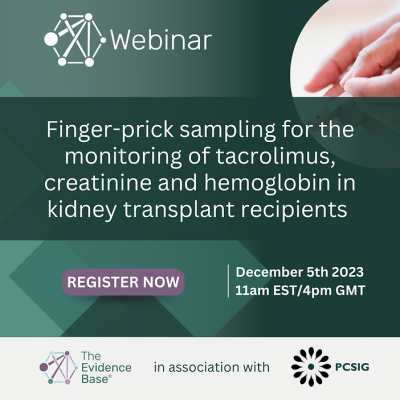
Finger-prick sampling for the monitoring of tacrolimus, creatinine and hemoglobin in kidney transplant recipients
Nils Tore Vethe Head of Section, Department of Pharmacology, Oslo University Hospital | Karsten Midtvedt Senior physician in Nephrology, Department of Transplantation Medicine, Oslo University Hospital | Neil Spooner Director Spooner Bioanalytical Solutions & Chair Patient Centric Sampling Interest Group
Finger-prick sampling emerges as an attractive tool for therapeutic drug monitoring and associated diagnostics during follow-up in different patient populations. Kidney transplant recipients constitute a group with likely valuable gain from this concept. It is necessary to meet requirements for quality, efficiency, user-friendliness and new forms of interaction in order to achieve successful implementation in clinical practice. Aspects related to technical operations and quality, factors important for success, as well as identified challenges will be highlighted in this webinar.
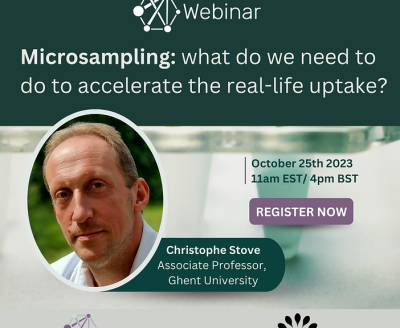
Microsampling: What do we need to do to accelerate the real-life uptake?
Christophe Stove Associate Professor, Laboratory of Toxicology, Ghent University, Belgium | Neil Spooner Director Spooner Bioanalytical Solutions & Chair Patient Centric Sampling Interest Group
This presentation provides an overview of the distinct requirements for routine implementation of dried blood microsampling.
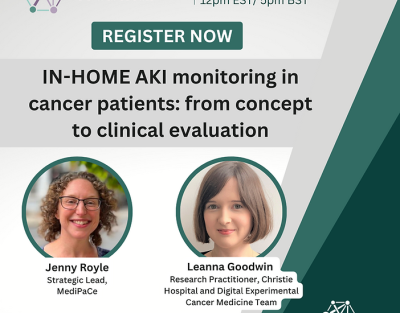
IN-HOME AKI Monitoring in Cancer Patients: From Concept to Clinical Evaluation
Jenny Royle Strategic Lead, MediPaCe (London, UK) | Leanna Goodwin Research Practitioner, The Christie Hospital and digital ECMT (Cancer Research UK Cancer Biomarker Centre)
Join this Free Webinar to learn about IN-HOME AKI monitoring in cancer patients. Moderated by Jenny Royle (Strategic Lead, MediPaCe).
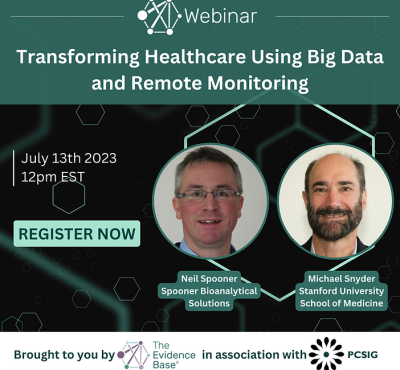
Transforming Healthcare Using Big Data and Remote Monitoring
Michael Snyder Professor & Chair Stanford University School of Medicine | Neil Spooner Director Spooner Bioanalytical Solutions & Chair Patient Centric Sampling Interest Group
Join in this Free Webinar to learn about the use of big data and remote monitoring to transform healthcare today. Moderated by Neil Spooner, Director, Spooner Bioanalytical Solutions and Co-Founder of the PCSIG.
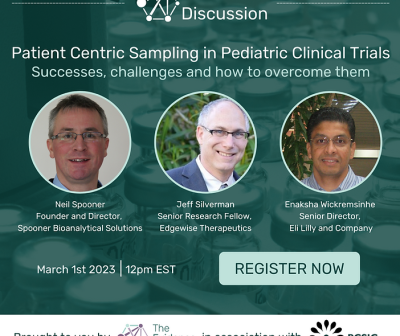
Patient Centric Sampling in Pediatric Clinical Trials – Successes, Challenges and How to Overcome Them
Enaksha Wickremsinhe Senior Director Eli Lilly & Company | Jeff Silverman Senior Research Fellow Edgewise Therapeutics | Neil Spooner Director Spooner Bioanalytical Solutions & Chair Patient Centric Sampling Interest Group
This Free Webinar discusses the use of patient centric sampling technologies for the collection of high quality blood samples for pediatric clinical trials.
Moderated by Neil Spooner, Director, Spooner Bioanalytical Solutions and Co-Founder of the Patient Centric Sampling Interest Group (PCSIG),